
Finance Minister Nirmala Sitharaman stated that the Reserve Bank of India (RBI) will persist in its efforts to prevent excessive volatility in the rupee, which has significantly depreciated against the US dollar due to global uncertainties, despite India's strong macro-economic fundamentals.

Electric commercial vehicle manufacturers in India are struggling to meet localisation requirements under the PM eDRIVE scheme, set to begin on Tuesday. The Society of Indian Automobile Manufacturers (Siam) has requested a seven-month extension until April 1, 2027, citing disruptions in the supply of rare earth magnets due to China's export restrictions and geopolitical tensions. The government is yet to decide on the request, which aims to prevent production disruptions and allow time for local supply chain development.

Glimpses of Iran's farewell to Ayatollah Ali Khamenei as mourners gathered in huge numbers for his funeral procession in Tehran.

Any military response to a cross-border terror attack from Pakistan will have to take into account the new alignments beginning to take shape in the region, points out former foreign secretary Shyam Saran.

The 'Finalissima' match between Spain and Argentina that was scheduled to be held in Qatar has been cancelled due to the conflict in the Middle East while the South American side rejected multiple alternatives, UEFA said on Sunday.

Mercedes-Benz India's Managing Director & CEO Santosh Iyer stated that demand continues to outstrip supply, particularly for the CLA electric vehicle, with over 1,000 orders and deliveries extending to March-April 2027. The company could have sold an additional 1,000 vehicles if supply had been adequate.

Civil Aviation Minister Kinjarapu Rammohan Naidu stated that no decision has been made regarding allowing Delhi and Mumbai airport operators to own and run airlines, as the government is carefully considering the implications of relaxing cross-ownership restrictions, including potential conflicts of interest and the need for more airlines.

Thousands of mourners and international delegates gathered as Iran paid its final respects to its late supreme leader Ayatollah Ali Khamenei, who was killed in an Israeli strike on February 28, in Tehran.
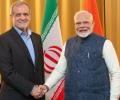
Prime Minister Narendra Modi held a telephonic conversation with Iranian President Masoud Pezeshkian, discussing recent developments in West Asia and reiterating India's emphasis on the importance of freedom of navigation in the Strait of Hormuz. Modi welcomed the recent peace understanding between the US and Iran, stressing dialogue and diplomacy for regional stability. India will also send representatives to the burial ceremonies of Iran's late Supreme Leader.

Shailesh Chandra, MD and CEO of Tata Motors Passenger Vehicles (TMPV), stated that the uncertainty surrounding how long commodity costs will remain elevated is a greater concern for the company than the actual price increases. He noted that commodity prices have risen significantly over the past five to six months, impacting margins and necessitating faster cost-reduction efforts, though no major production or supply-side issues are currently foreseen.

'India was the emirate's largest international source market by hotel guest volume.'
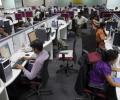
Samsung India has launched an Innovation Campus in Karnataka, in partnership with Nrupathunga University, to train 2,000 young individuals in industry-relevant AI skills. This initiative aims to support Karnataka's goal of building an AI-native ecosystem and developing a future-ready technology workforce, expanding access to practical AI education.

India's finance ministry anticipates inflation will remain relatively contained in the coming months, supported by a correction in crude oil prices and softening input costs following the cessation of the West Asia conflict, despite earlier spikes in wholesale and retail inflation.

The Reserve Bank of India (RBI) net bought $561 million in June, marking its first net purchase since February, following three consecutive months of net sales. This move coincided with a series of government and RBI measures to attract foreign capital, leading to a 0.36 per cent appreciation of the rupee against the dollar.

UK counter-terror police are leading an investigation after five men were arrested near RAF Fairford on suspicion of terror offences and under the Explosives Act, following a call about three suspicious vehicles. The incident prompted a major response, including the Army's Explosive Ordinance Disposal unit and the evacuation of 85 households.

'In the current environment, India is effectively paying a premium for supply security and diversification.'

The Indian IPO market recorded its highest monthly fundraising in September, with 34 mainboard companies raising 39,309 crore, despite a significant decline in the Nifty 50 index.

Pakistan's army chief held a series of engagements with Iranian leaders in Tehran as regional diplomacy remained in focus.

India's private sector activity slowed to a four-year low in July, with the HSBC Flash Purchasing Managers' Index (PMI) falling to 54.3, driven by weakened sales and output amidst renewed tensions in West Asia and rising inflationary pressures.

India has exhausted 58.04 per cent of its FY27 fertiliser subsidy budget in under five months, primarily due to a significant surge in global urea prices following the conflict in West Asia, necessitating potential additional government expenditure.

India has condemned an attack on a Panama-flagged oil tanker off the coast of Oman, which resulted in one Indian seafarer going missing and 13 others being rescued. The Ministry of External Affairs is closely monitoring the situation and coordinating with Omani authorities for search and rescue operations, while also reiterating calls for de-escalation and safe navigation in the region.

Indian benchmark indices, Sensex and Nifty, experienced declines in early trade due to a significant surge in crude oil prices, exacerbated by escalating tensions in the West Asia. Track how Sensex, Nifty fared on July 23.
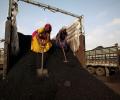
India's nine key infrastructure sectors recorded a three-month low growth of 4.8 per cent in August, primarily due to reduced production in coal, natural gas, crude oil, and fertiliser, according to government data.
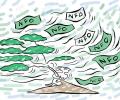
Uncertainty stemming from the US-Iran conflict has significantly impacted India's mutual fund industry, leading to a sharp decline in new fund offers (NFOs) in March, despite numerous regulatory approvals. This geopolitical tension, coupled with existing market strain and distributor hesitation, has dampened investor sentiment and affected overall inflows.
Indian equities on Dalal Street saw volatility as global market trends and fresh tariff concerns linked to Donald Trump impacted investor sentiment. Track Sensex, Nifty50 movement and key market drivers for April 2, 2026.

'If crude remains above $100 per barrel, with restricted retail-price increases, OMCs could face negative petrol and diesel marketing margins, higher LPG under-recoveries, higher crude-landing, freight and insurance costs, working capital and debt accumulation and inventory losses if crude subsequently corrects sharply.'

'Rather than deploying all their money at once, investors should invest gradually.' 'A staggered approach is the better strategy because volatility is likely to persist.'
Researchers have outlined five crucial actions to help the world prepare for a potentially strongest-on-record El Nino, aiming to reduce its severe health consequences like infectious diseases, malnutrition, and heat-related conditions. These recommendations, published in The Lancet, emphasise a comprehensive risk overview and early preparatory measures.
Indian benchmark indices, Sensex and Nifty, experienced significant declines, with the Sensex falling 493 points and the Nifty dropping for the sixth consecutive day, primarily due to elevated crude oil prices reaching USD 91 per barrel and diminishing hopes for a diplomatic resolution in West Asia.

India has advised its nationals to postpone travel to Iran and urged those already there to consider leaving due to increasing instability and conflict in the region. The advisory from the Indian Embassy in Tehran highlights heightened caution and the need to monitor the security situation.

The Indian corporate sector demonstrated strong credit quality in the first half of FY27, driven by robust balance sheets and healthy liquidity, despite facing risks from elevated crude prices, inflation, and global interest rates.

The United States Central Command announced strikes against Iranian military targets, including air defence and communication sites, in retaliation for alleged attacks on commercial shipping and US personnel. However, Iran's Foreign Ministry claims these strikes caused over 50 civilian casualties at a wedding and vowed a firm response. Iran's state media also reported retaliatory ballistic missile and drone attacks on US bases in Jordan and Bahrain, claims which were partially corroborated by Kuwait and Jordan reporting intercepted drones and missiles.
'In fact, when monetary policy has been deployed, it does not distinguish between types of shocks. It goes straight for the kill.'

By the time she finished her term as SBI chairman, she was overseeing over two lakh employees, 24,000 domestic branches, 100 international ones and a bank that had stepped into the technological age and become youth-friendly. Meet Arundhati Bhattacharya, the first woman chairman of the State Bank of India and president and CEO, Salesforce, South Asia.

The Centre has spent 28 per cent of its FY27 capital expenditure budget of Rs 12.21 trillion in the first three months against around 24.5 per cent during the corresponding period a year ago.

US Vice President JD Vance and Prime Minister Narendra Modi held a phone call to discuss expanding the India-US comprehensive global strategic partnership, focusing on trade, defence, energy security, emerging technologies, and critical minerals. The discussion comes amidst rising tensions in West Asia and recent regional realignments, with both leaders reaffirming their commitment to strengthening cooperation.

The government maintained a strong pace of capital expenditure, which jumped nearly 24 per cent to Rs 3.40 trillion in April-June.

Shree Charani set a new T20I bowling rating record with 817 points, while Smriti Mandhana returned to the batting top five after starring in India's Asian Games triumph.

Prime Minister Narendra Modi, in his 80th Independence Day address, expressed strong confidence that India will achieve developed nation status by 2047, urging citizens to embrace big dreams and unwavering resolve to realise 'Viksit Bharat'. He highlighted India's economic transformation and significant growth in various sectors, including defence production, electronic manufacturing, and mobile phone production.

Reports from the New York Post, citing Mohsen Heydari, reveal that Mojtaba Khamenei was "pulled from the rubble" of a Tehran hospital after alleged US and Israeli strikes. This occurred before his secret selection as Iran's new Supreme Leader by the Assembly of Experts, which was also reportedly targeted. Conflicting accounts from Donald Trump and Iranian President Masoud Pezeshkian have further shrouded Khamenei's health in mystery, with some suggesting severe injuries while others claim he is "completely" healthy.
